
You leave home at 6°C and get back at 20°C. Dress for the start and you are carrying half your wardrobe by mid-morning. Dress for the high and the first hour is miserable.
So I built a new tool for the site. It is a cycling clothing configurator, it is free, and it does one thing: tell you what to wear.
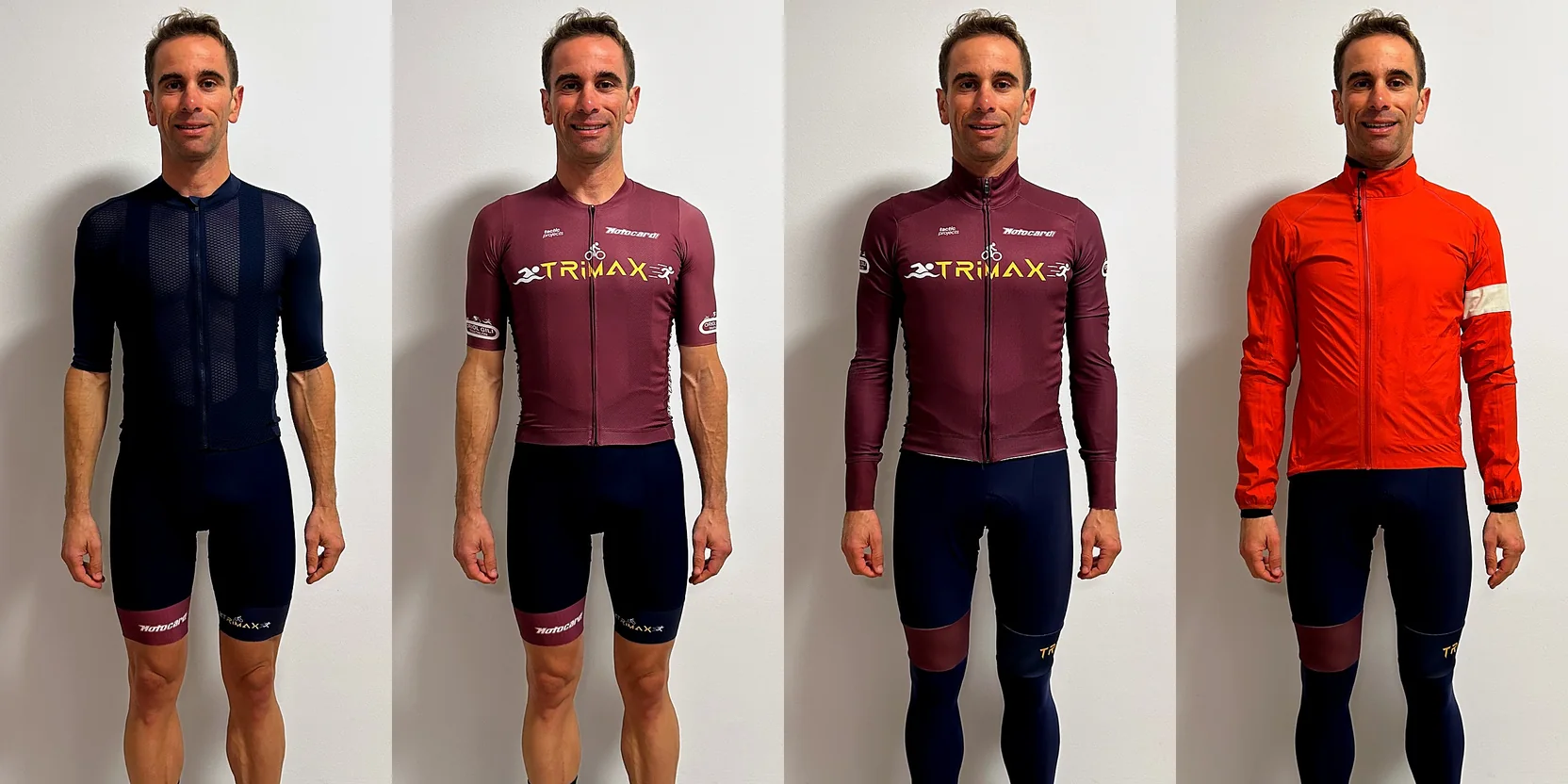
What you give it and what you get back
You give it the temperature when you roll out, the expected high, whether it might rain and whether the route is flat or has climbs. It works in Celsius or Fahrenheit. You get four columns back: your legs, and the three layers on your upper body. In each one you see the recommended piece, the ones that would also work, and the ones that clash with what you have already picked.
The photos are of me, not from a catalogue. Change an option and the photo changes, so you see what you will actually look like going out the door.
How it thinks
Three ideas, the same ones I use myself:
- You do not dress for the start or for the high. You dress for a point in between, closer to the start. The cold at the beginning is what hurts most, and heat is fixed by taking one piece off.
- Legs come first. Shorts, shorts with leg warmers, or tights. It is the most limiting choice, and everything else follows from it.
- Some things do not go together. Short sleeves with tights, for example. Wear it if you like, but among cyclists it is not done. Pick a combination like that and it swaps the other piece and tells you why.
The three-layer rule
On top, everything is organised in three layers, and each one does a different job:
- Underneath, the mesh base layer. It moves sweat and adds no warmth.
- The jersey. This is the layer that keeps you warm.
- The wind layer. It stops the wind, which is what makes it feel colder.
If in doubt, or if there is a long descent, take the wind layer. Folded, it is the size of a fist.
Three ways to use it
- Manual. You enter the numbers.
- Route. Pick one of my Girona routes and it loads the elevation, the height of the climb and the area. One button pulls the weather forecast for the start town, for the day and time you choose. Each route page also has a shortcut that opens the configurator with that route already loaded.
- Trip. Tell it how many days you are away and the low and the high you expect, and it writes your packing list.
The details that never make it into a chart
Below the layers are the accessories, each with a short explanation: arm warmers, neck warmer, gloves and overshoes. And what goes in each jersey pocket, with food worked out at 60 grams of carbohydrate per hour.
There are a couple of my own tricks in there too. When the neck warmer comes off, I wrap it in a figure of eight around the GPS mount. One pocket saved.
It is a first version, and you can help me tune it
The rules come from how I dress and what I tell my athletes. Some people run colder or warmer, and there is a tolerance setting for that.
At the end of the result there are three buttons: I was cold, perfect, and I was hot. When you get back from the ride, tap one. It reaches me with the temperature on the day and what you were wearing, with no personal data, and that is how I correct the rules.