
Every message I get from a new athlete tells a story. Some are two lines long. Some are two pages. But after reading hundreds of them, I see the same five reasons why athletes hire a coach, again and again.
Read them and see which one is yours. Maybe more than one.
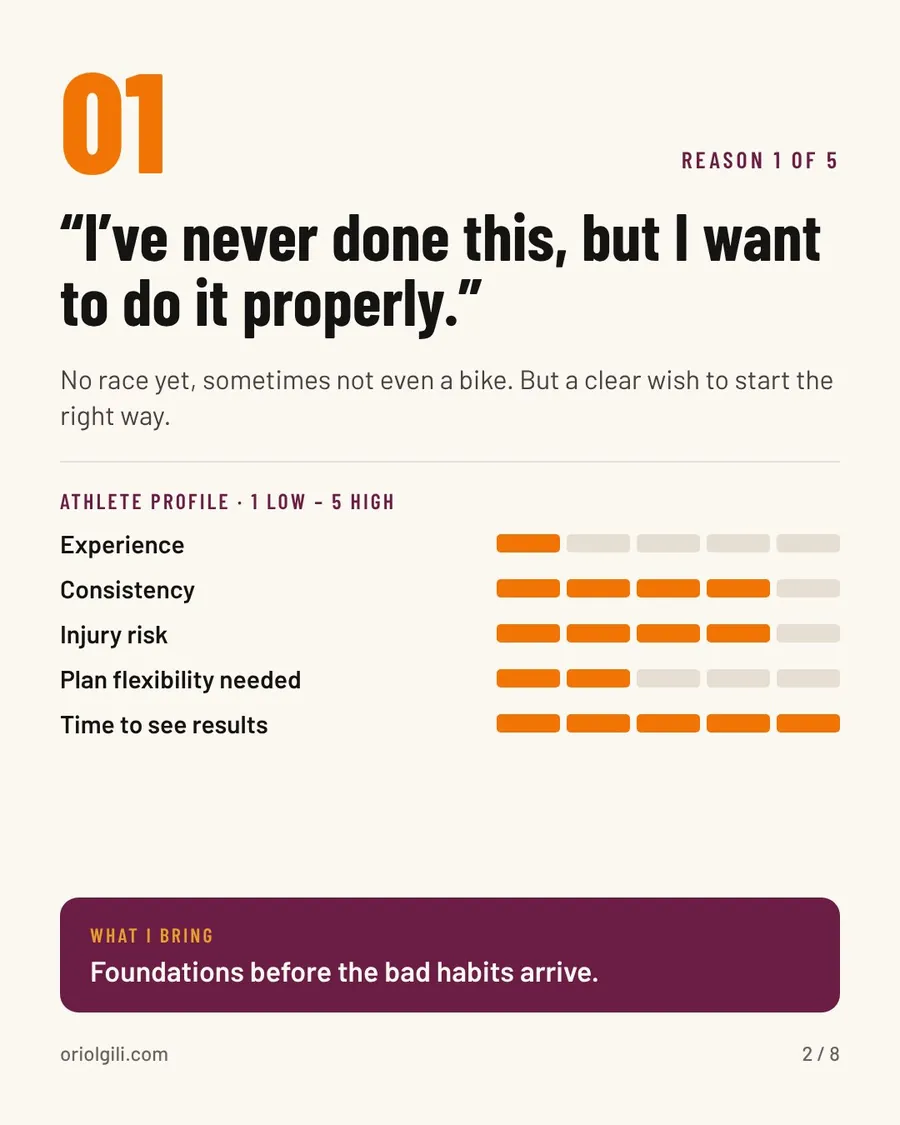
1. “I’ve never done this, but I want to do it properly.”
This is the most common message I get. No race experience, sometimes not even a bike yet, but a clear wish to start the right way. One athlete put it perfectly: “I want to start seriously, with someone who gives me a solid base from day one.”
You don’t need to know anything. You need someone who builds the foundations before the bad habits arrive.
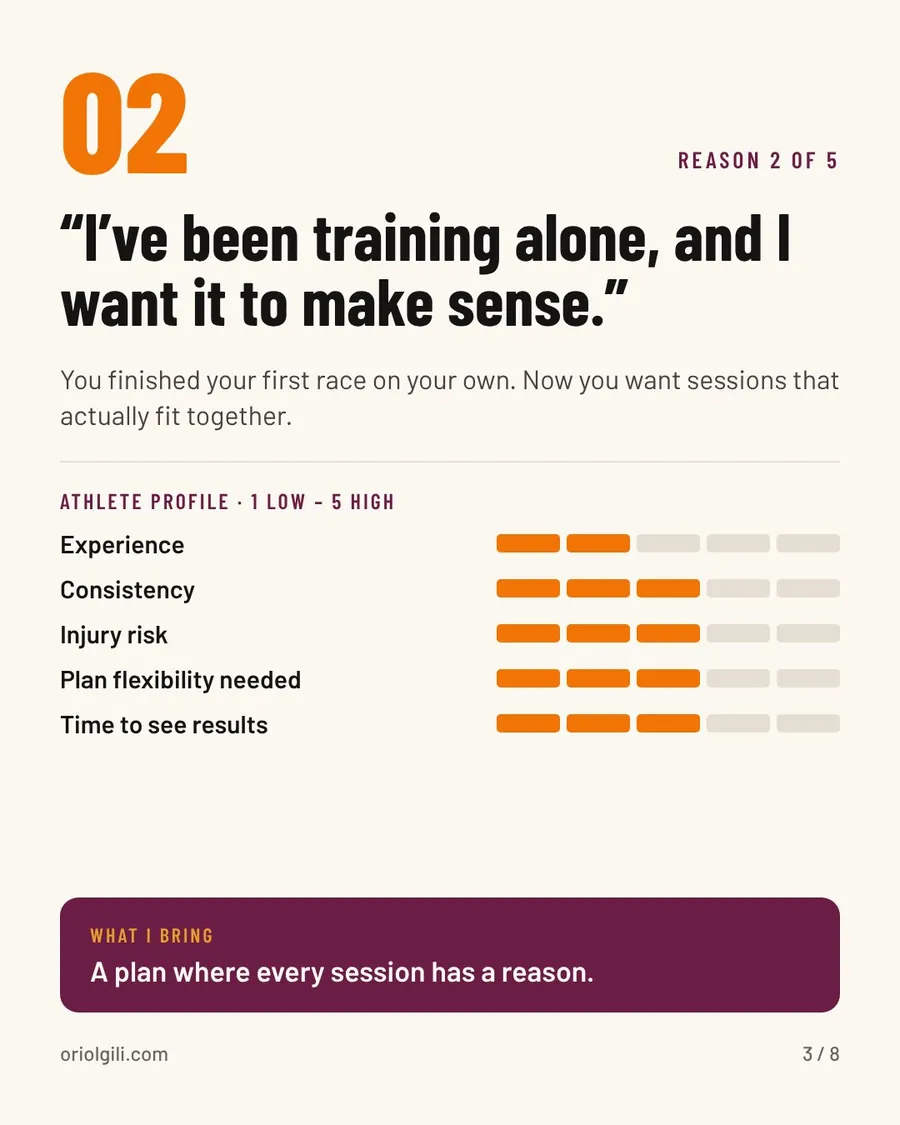
2. “I’ve been training alone, and I want it to make sense.”
You already train. You finished your first 10k or your first sprint on your own. But you copy sessions from here and there, and you are not sure they fit together. As one athlete wrote: “I want to train with more coherence, with a coach, and not on my own.”
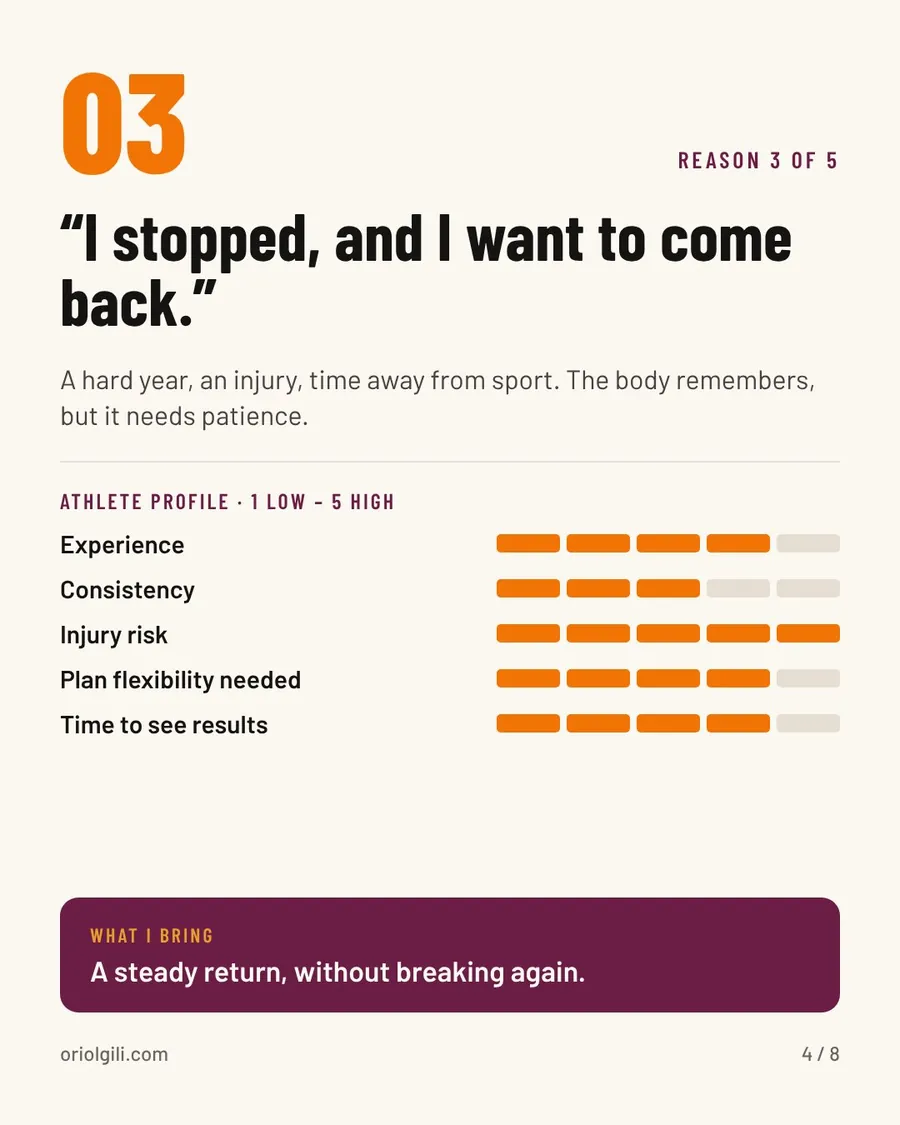
3. “I stopped, and I want to come back.”
A hard year. Personal issues. An injury. A few years away from sport and some extra kilos. Some people even write to me a week after quitting smoking, already noticing their heart rate dropping on walks.
Coming back is a different job from starting. The body remembers, but it needs patience, and the goal is to return without breaking again.
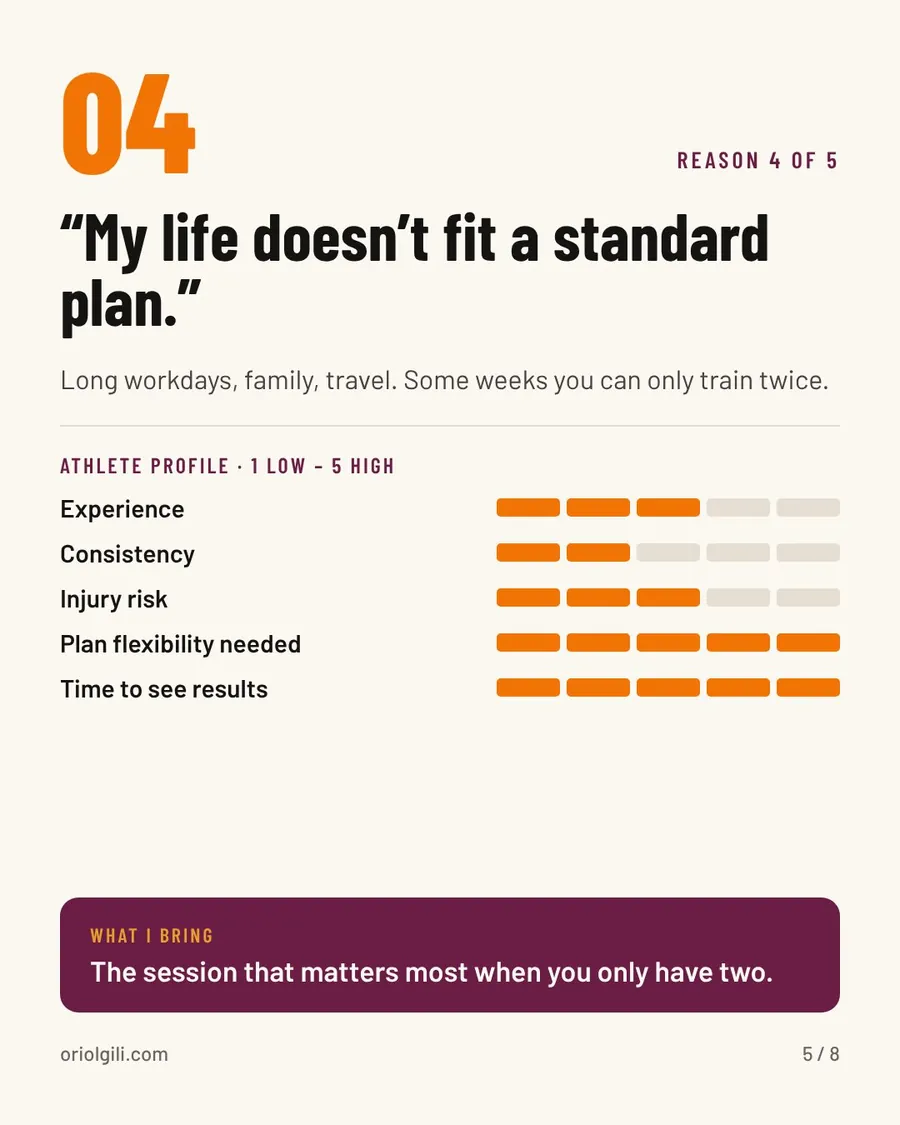
4. “My life doesn’t fit a standard plan.”
Forty-hour weeks. Split shifts. Family, a partner, the dog. Weeks where you can only train twice. A season with work trips across three continents and a race in the middle.
A plan from the internet assumes a perfect week. Real life never gives you one. What you need is someone who decides which session matters most when you only have two.
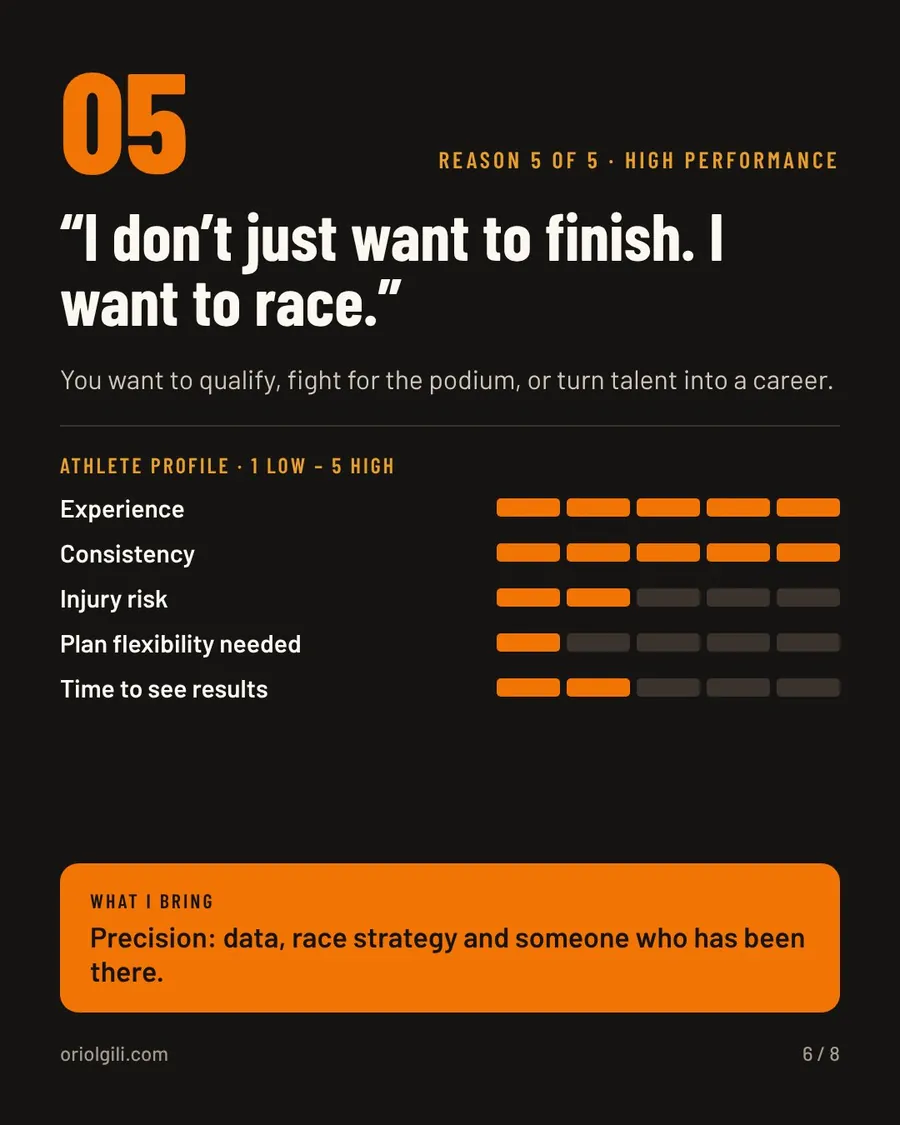
5. “I don’t just want to finish. I want to race.”
This is the athlete who wants to qualify, fight for the podium, or turn talent into a career. Elite athletes rarely use a contact form: they call, or someone in the team passes my number. But the conversation is the same. You don’t need motivation. You need precision: data, race strategy, and someone who has been there.
Finishing is not the hard part
In the last few years I’ve seen more and more complete beginners who want to skip sprint and Olympic distance and go straight to a half or a full Ironman. It feels like a longer race is a bigger challenge.
With good preparation, we can get you to the finish line. Finishing is within reach for almost everyone. But I see what happens on race day: the swim feels like survival, the transitions take forever, and you spend hours alone without really racing.
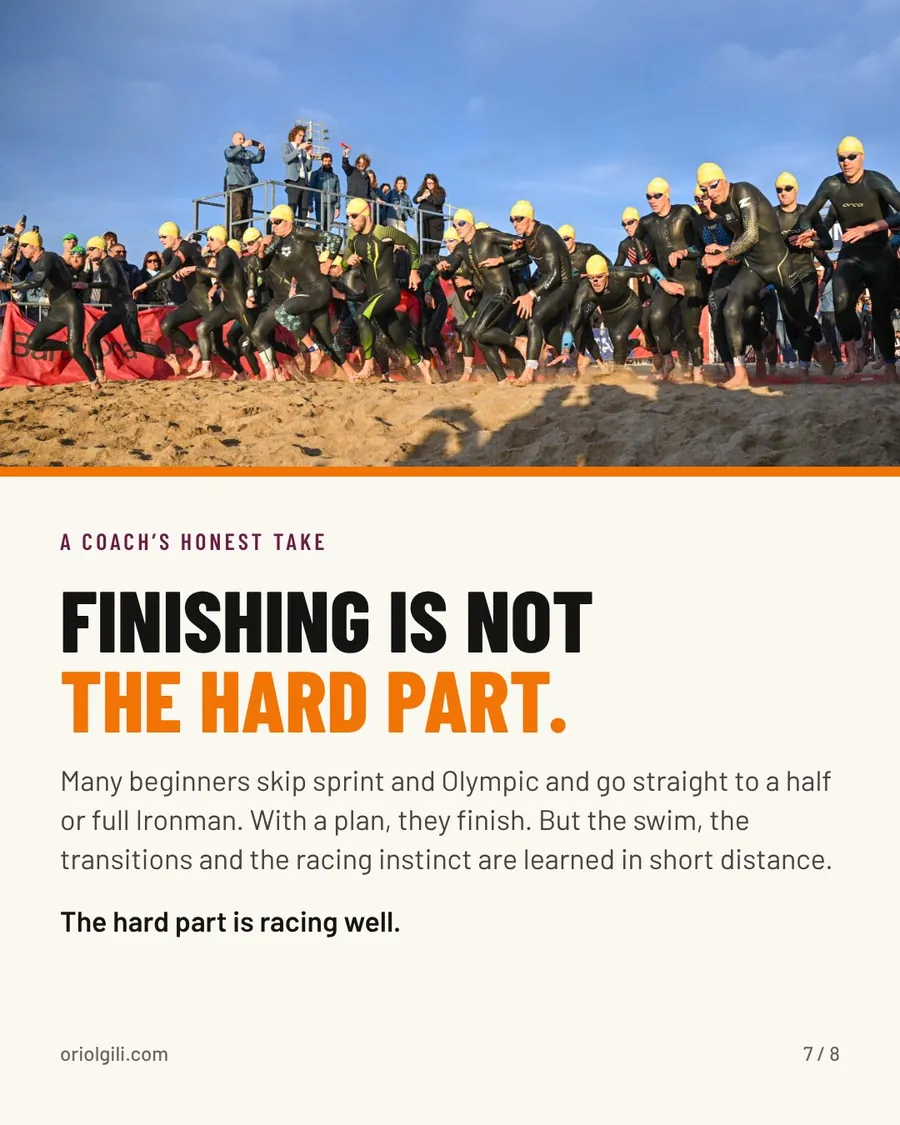
Those skills don’t improve over long distance. They improve by racing short distance, again and again, whether you like it or not.
As a coach, I look at performance at any distance: how your race unfolds compared to the people around you. Big brands have turned many races into sport tourism, and that’s fine, it’s a great way to see new countries. But a race is still a race. The hard part is not getting to the end. It’s racing well while you get there.
Why some athletes see results faster
In endurance sport, progress follows the hours you put in over a year. An athlete with a busy life might train 300 to 400 hours a year. A high-level athlete can get close to 1,000. The maths is simple: what one achieves in a season, the other needs about three to reach.
That’s not a reason to give up. It’s a reason to set honest expectations, plan the season with milestones, and make every one of those hours count. And for complete beginners, more hours don’t speed things up at the start: the body needs time to adapt, whatever you invest.
Every athlete becomes a project
Five reasons, five very different starting points. That’s why I never have two plans that look the same.
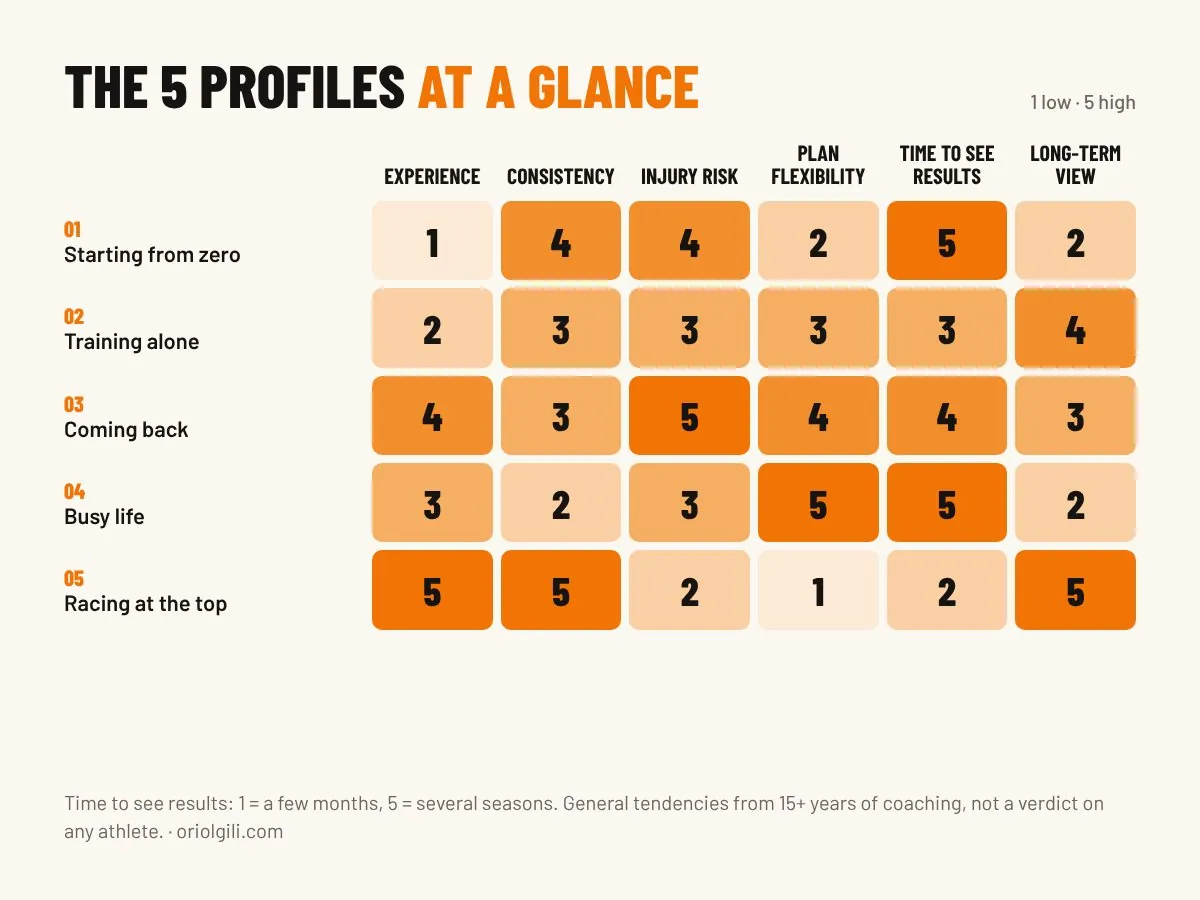
Some athletes need the analyst: power, lactate, pacing, every number turned into a decision. Some need the coach who listens, because the hardest part of their week happens in their head, not on the bike. And some need a planner, someone who rebuilds the week every time work or family changes it.
Most need a bit of all three. Finding the right mix is the first thing we work on together. You can see how this works in practice in my online coaching.
Tell me three things
If you saw yourself in one of these stories, write to me. You don’t need a long message, but these three things help me understand you from the first read:
- Where you are now. Your sport, your experience, and any race you’ve done.
- Where you want to go. The goal, even if it’s still a dream.
- What your weeks look like. Work, family, and the hours you really have.
I read every message myself and reply within 24 hours on weekdays. If it feels right for both of us, we’ll have a free video call to plan your project.