
World Championship slots are not won in the race. They are won months before.
The rides that build a season don’t make headlines. There is no finish photo, no result to post. There is a Tuesday morning in November, alone, holding a power number that feels embarrassingly easy. That session is the one that decides whether you are standing on the start line in peak form or arriving there already tired.
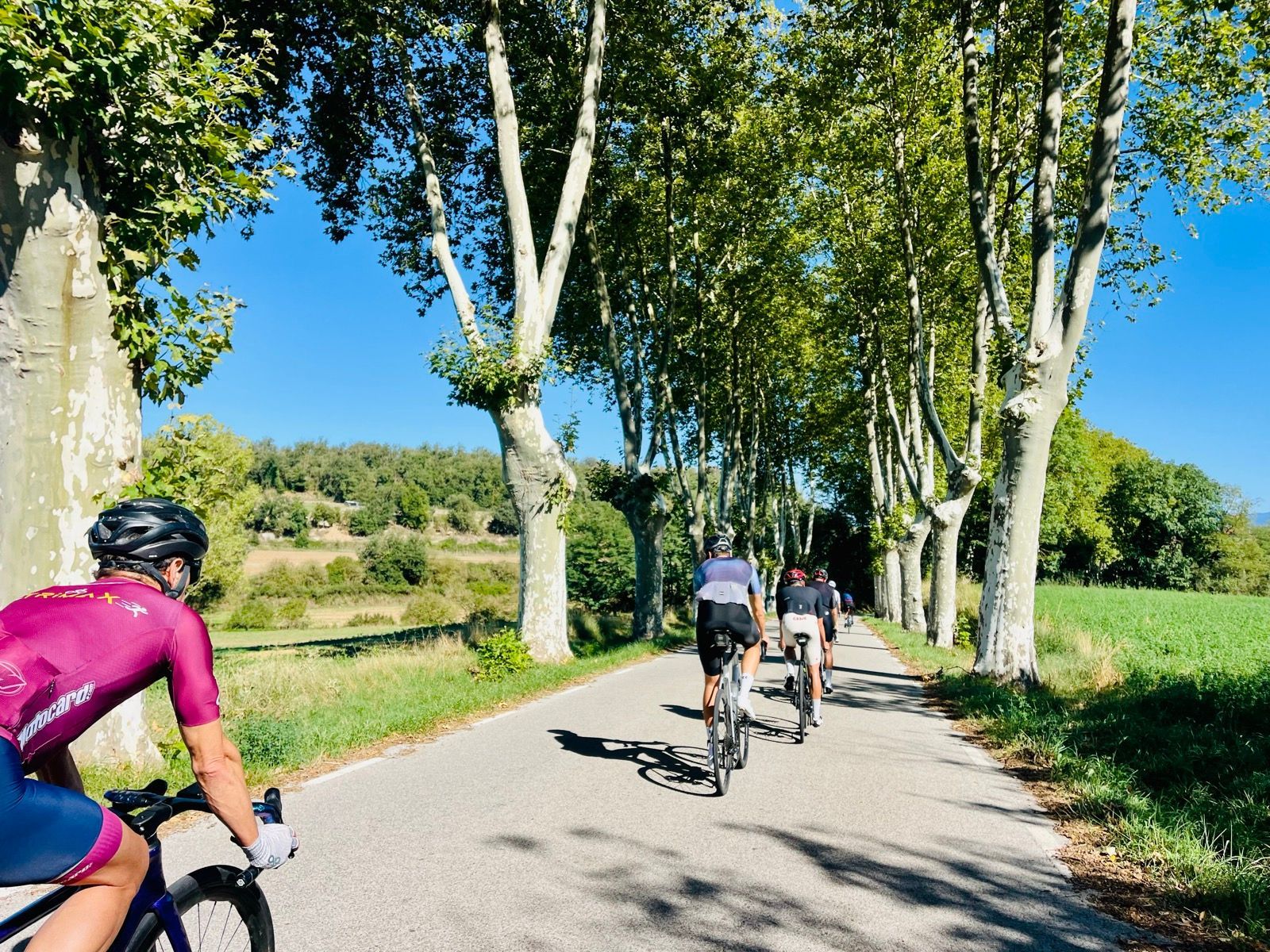
Every athlete I have taken to an IRONMAN or 70.3 World Championship calculated that finish line months earlier, with a plan and with milestones. None of them got there by training hard whenever they felt like it.
October is when I sit down with each of my athletes to plan the following season. The approach is always the same five steps.
Start with the end in mind
Pick the goal race first, then the qualifier, then work backwards. This order matters more than it looks.
A qualifier is not just another race on the calendar. It has a date, a field, a number of slots for your age group, and a roll-down that behaves differently at every event. Choosing it late means you take whatever is left, and what is left is usually the race that suits you worst.
Once the two dates are fixed, everything else is arithmetic: how many weeks you have, how many of them can be hard, where the taper sits, and how much room is left for the base. If the arithmetic doesn’t work, better to find out in October than in May.

Review before you plan
Before writing a single session, we look back at the season that just finished. What worked, what didn’t, and why.
This is the step athletes want to skip, because a season that went badly is not fun to reread. But the data has no feelings. Power curves, swim pace at threshold, run durability in the last hour, the weeks where the plan quietly stopped being executed: it is all there. Patterns repeat until somebody names them.
Most of the time the answer is not a missing session. It is a missing month.
Build the base now
Aerobic volume, strength and technique. Intensity comes later, and it comes on top of something.
The base phase is where you raise the ceiling you will spend the rest of the year pushing against. It is also the phase with the least obvious feedback, which is exactly why it gets cut short. Nobody finishes an easy three-hour ride feeling like a hero.
Strength work belongs here too, in the months when it does not compete with race-specific sessions. So does technique, in the water especially, where a change in stroke needs weeks of low-intensity repetition before it survives contact with race pace.
Plan for real life
Work, family and travel are part of the plan, not obstacles to it.
A plan that assumes a perfect week is a plan that breaks in the first imperfect one, and then the athlete feels guilty about a failure that was designed in from the start. I would rather build a season around the four or five sessions you will genuinely do every week than around the nine you would do in an ideal life.
Consistency over twenty weeks beats intensity over three. It is not close.
Measure and adjust
Every week, with data and with honest feedback.
The data side is straightforward: training load, the shape of the fitness and fatigue curves, HRV when it is tracked properly, the numbers from each test. The honest feedback side is harder and matters more. How did the session actually feel. What you skipped and why. Whether you are sleeping.
A plan is a hypothesis. Each week either confirms it or tells you to change it.
The mistake I see every winter
Every season, the same one: athletes who will not slow down.
Base sessions are supposed to be easy. They will ramp up at the proper time, and that time is written in the plan. But easy feels like doing nothing, so the easy ride creeps up into the middle, where it is hard enough to cost real recovery and not hard enough to drive real adaptation.
Those athletes get a flat season. Decent form in February, the same form in July, no peak when it is needed. They trained a lot and arrived nowhere in particular.
Go easy when we build the base. Go hard when it is time to. The one thing that does not work is living in the comfortable middle.
Where to start
If you are reading this in October, you are early, and early is the whole point. Pick the goal race. Find the qualifier. Be honest about the season that just ended. Then build from there.
If you would rather not do that alone, I open a limited number of places each season and the first call is free. You can read how I work on the Train With Me in 2027 page.
So: what is your big goal for 2027?